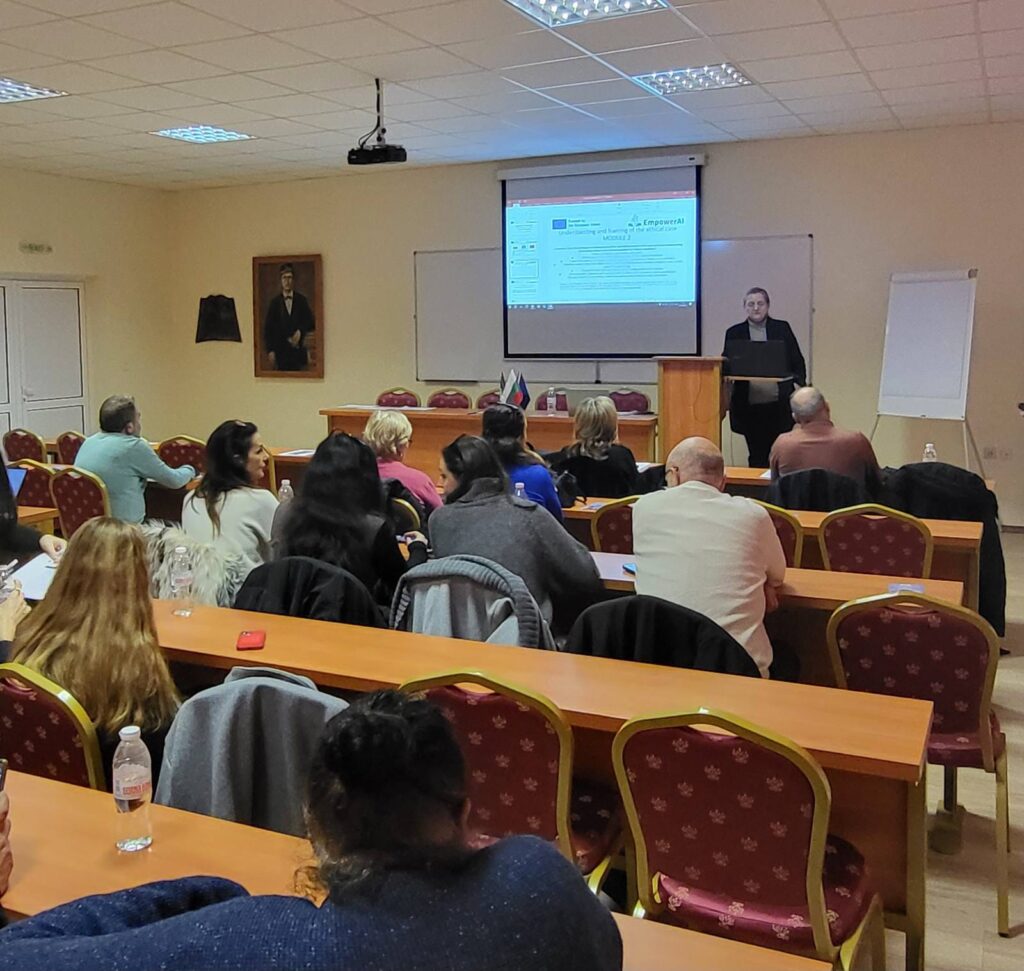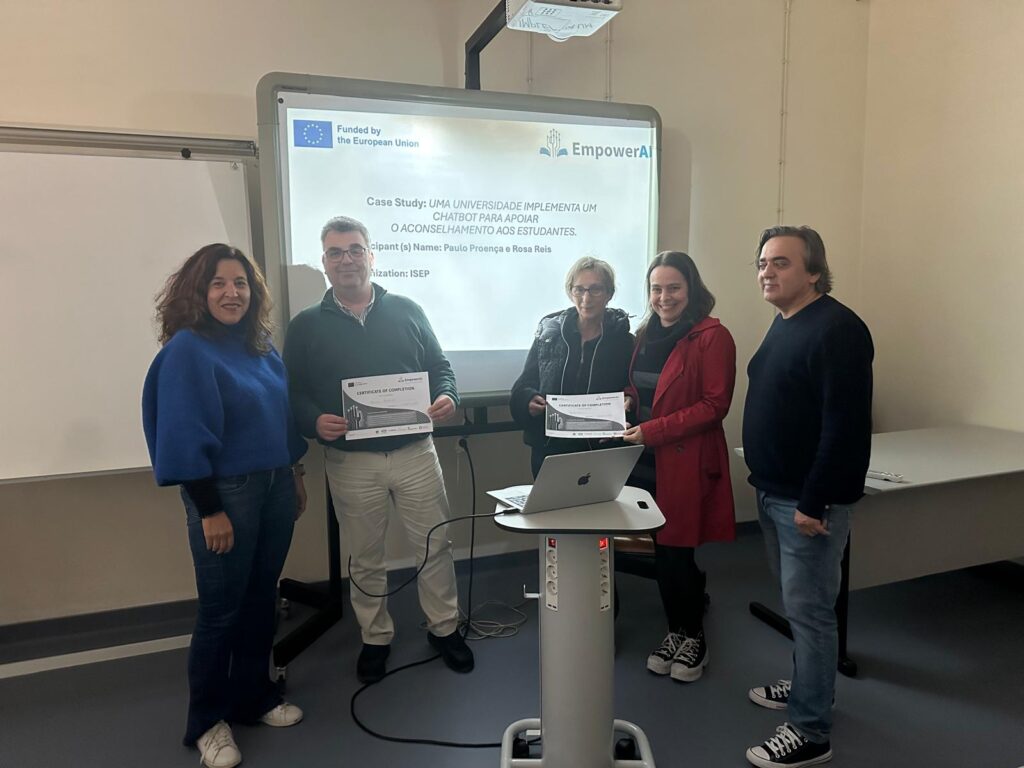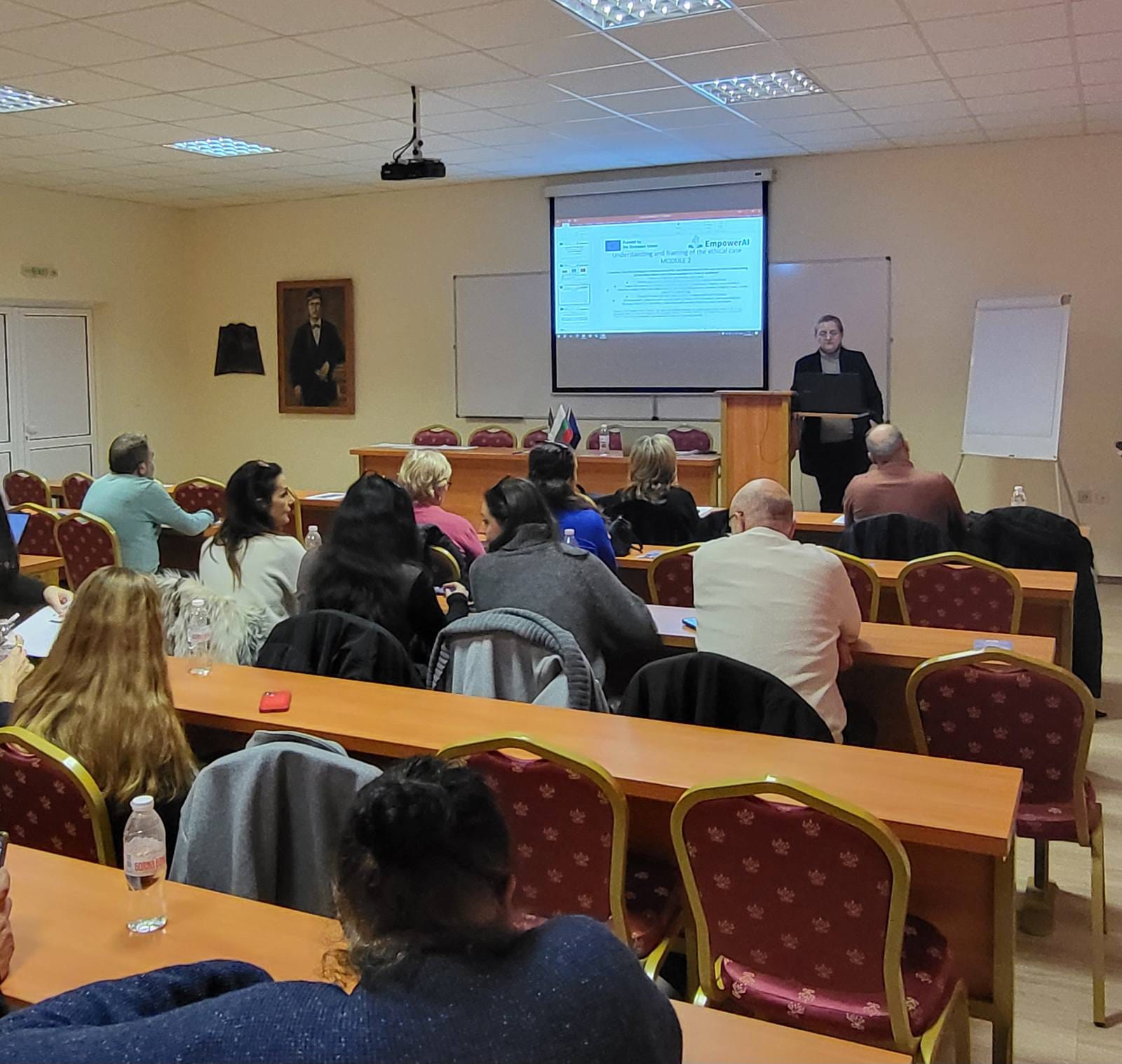
The successful completion of the Seminar Series for Academic Staff of the EMPOWER AI project marked an important step towards supporting the ethical and responsible integration of artificial intelligence in higher education. Through the development and implementation of a seminar series for academic staff, the project partnership created a collaborative learning environment where educators explored both the opportunities and challenges emerging from the increasing use of AI in academia.
Based on the Ethical Guidelines for AI use in Academia developed in the previous stages of the project, the seminar curriculum introduced academic staff to key principles such as fairness, transparency, academic integrity, accountability, and critical thinking while encouraging the practical application of these principles through case studies and peer discussion. The three-module structure combined introductory sessions, independent ethical reflection, and collaborative presentations, allowing participants to connect ethical theory with real academic scenarios.
The seminars were successfully delivered across all partner universities, including the University of Patras, the Technical University of Sofia, the Instituto Superior de Engenharia do Porto, and the Higher School of Transport “Todor Kableshkov," attracting strong interest and active participation from academic staff. Following the implementation phase, partners carried out an internal evaluation and fine-tuning process to further improve the seminar content and training materials. The evaluation highlighted the need for additional practical examples, stronger connections between ethical principles and academic workflows, and more interactive case-study discussions.
The activities also revealed broader pedagogical challenges linked to the growing use of AI in higher education. Discussions focused on assessment integrity, critical thinking, accountability, and the need to adapt teaching and evaluation methods to AI-supported learning environments. Each partner university contributed discipline-specific perspectives, ranging from engineering and transport education to institutional governance and academic policy. The work concluded with small-scale presentation events organized in the partner countries, where the seminar results and the developed curriculum were presented to stakeholders, educators, and the wider public.